
In the Nahe, Time Belongs to Weingut H. Dönnhoff
There are few pleasures as quietly transformative as a great glass of wine. The first impression is often aromatic: citrus peel rising from the glass, white blossom carried on a cool current of air, a suggestion of wet stone after summer rain. Then comes texture - a fine line of acidity that sharpens the palate before settling into something composed and enduring. In such moments, wine moves beyond product and becomes an expression of place, season and human judgement. Yet in an era shaped by speed and visibility, even fine wine is often expected to impress immediately. The paradox remains: the most profound bottles are born of patience, while markets tend to reward immediacy.
In Germany’s Nahe region, patience is not a choice but a condition. The slopes, soils and shifting exposures require close attention year after year, and Riesling, perhaps more than any other variety, records each decision with precision. It reveals excess as clearly as it rewards restraint. Within this exacting landscape, Weingut H. Dönnhoff has built its reputation not through expansion or trend, but through refinement. The estate’s wines - whether dry Grosses Gewächs or finely balanced Prädikat expressions - are shaped by the conviction that elegance and longevity begin in the vineyard and are preserved through discipline. Here, luxury is not proclaimed; it emerges gradually, season after season, as origin speaks with clarity.
Terroir Without Theatre
At the core of Weingut H. Dönnhoff lies a clear principle: great wines are shaped in the vineyard. This is less a romantic appeal to tradition than a practical framework guiding daily work. Vineyard management is regarded as the decisive creative act, with yields deliberately limited and each site observed with meticulous care. The Nahe’s mosaic of soils - volcanic porphyry, slate and loess - offers remarkable diversity of expression, but without precision these distinctions can easily blur. Dönnhoff’s work has long focused on ensuring that each parcel retains its individual voice.
The estate’s portfolio reflects this discipline. From dry Grosses Gewächs bottlings to finely etched Prädikat wines, the common thread is not sweetness level or stylistic flourish, but clarity of origin. Today, the estate cultivates nine Grosse Lagen and two Erste Lagen - sites regarded among the finest in Germany, and by some observers as among the most distinguished Riesling terroirs worldwide. The wines show structure without heaviness, ripeness without excess, and longevity without force. Work in the cellar remains rooted in traditional methods, complemented by carefully chosen modern equipment to safeguard precision and ensure the highest quality standards. In this sense, terroir is not treated as narrative, but as a standard against which every decision is measured.
Such an approach inevitably raises a broader question. In an international market that often values scale and recognisable style, can a philosophy grounded in subtlety sustain long-term strength?
Refinement as Strategy
Weingut H. Dönnhoff’s answer has been consistent: refinement itself is the strategy. Growth is not pursued as an objective in itself, and size is not equated with success. Instead, the estate has consolidated its standing through reliability across vintages and uncompromising quality standards. In fine wine, trust is accumulated slowly and lost quickly. By maintaining low yields and resisting stylistic fashion, Dönnhoff has preserved the coherence of its identity.
This restraint is also reflected in its market relationships. Long-standing partnerships in gastronomy and across international markets have been built through continuity rather than opportunism. Collaboration begins with alignment of philosophy before commercial considerations follow. Transparency and steadiness underpin these relationships, reinforcing credibility over decades rather than seasons. Scarcity here is structural - the natural result of disciplined vineyard work - rather than a product of staging.
The economic logic is understated but durable. Collectors and leading restaurateurs value reliability of excellence. Today, the estate’s wines are poured in more than 50 countries and featured in many of the world’s leading restaurants, where they are valued for their consistency and capacity to age. Among dedicated Riesling enthusiasts, they are regarded with similar respect - appreciated for a precision and balance that rarely disappoint. A producer that delivers measured precision year after year becomes more than a supplier; it becomes a point of reference. Such stability, however, depends on internal continuity.
Continuity as Foundation
With a history spanning more than 250 years, Weingut H. Dönnhoff’s continuity is more than tradition; it is structure. Family ownership functions less as branding and more as framework. Each generation builds upon the judgement and experience of the previous one, refining rather than redefining. This continuity creates a depth of site knowledge that cannot be accelerated. Decisions regarding harvest timing, canopy management or blending draw upon decades of observation, forming a cumulative understanding rooted firmly in place.
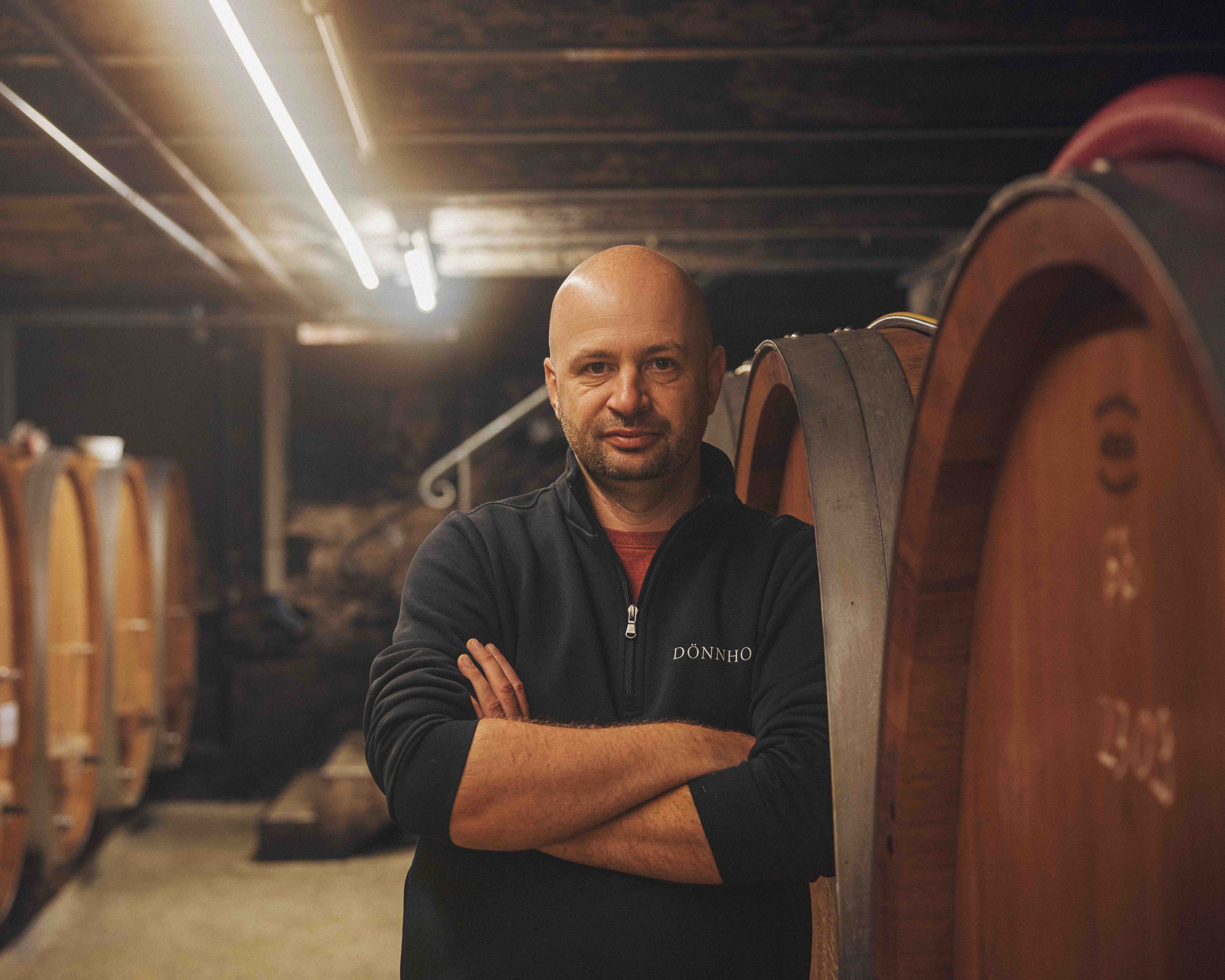
Today, the estate is led by Cornelius Dönnhoff together with his wife Anne. The estate’s internal culture reflects this stability. Many team members have worked at the winery for years, fostering a shared understanding of quality and responsibility. Precision in the cellar depends on alignment in the vineyard, and both are treated as parts of a continuous process. Modern techniques are adopted selectively, ensuring that innovation supports clarity rather than obscures it.
This human continuity forms the quiet infrastructure behind the wines’ longevity. Yet even the most established estates must respond to changing conditions.
Refinement in a Changing Climate
Climate change has introduced new variables into European viticulture, compressing harvest windows and altering ripening dynamics. For an estate whose style is defined by balance and ageing potential, these developments require careful adaptation.
Weingut H. Dönnhoff has responded not by expanding into new territories, but by deepening engagement with its existing vineyards. Site observation has intensified, canopy management adjusted, and sustainable practices further integrated to protect soil health and vine resilience.
The estate’s outlook remains measured. Refinement, not enlargement, continues to define its path. Sustainable viticulture is approached as long-term stewardship, ensuring that each vineyard retains its character despite climatic shifts. Patience, once associated primarily with maturation, has become an essential strategic discipline.
Across vineyards and markets alike, Weingut H. Dönnhoff illustrates that the highest form of distinction in wine may be credibility sustained over time. By treating terroir as responsibility rather than theatre, and continuity as structure rather than sentiment, the estate has secured its place among Germany’s leading Riesling producers on the basis of trust.
In an industry often drawn to amplification, Dönnhoff represents a different model - one in which land, family and craft remain aligned, and where wines speak through clarity of origin rather than spectacle. Such an approach does not chase the future. It prepares for it, quietly and consistently, season after season.