
Quinta do Piloto and the Quiet Language of Wine
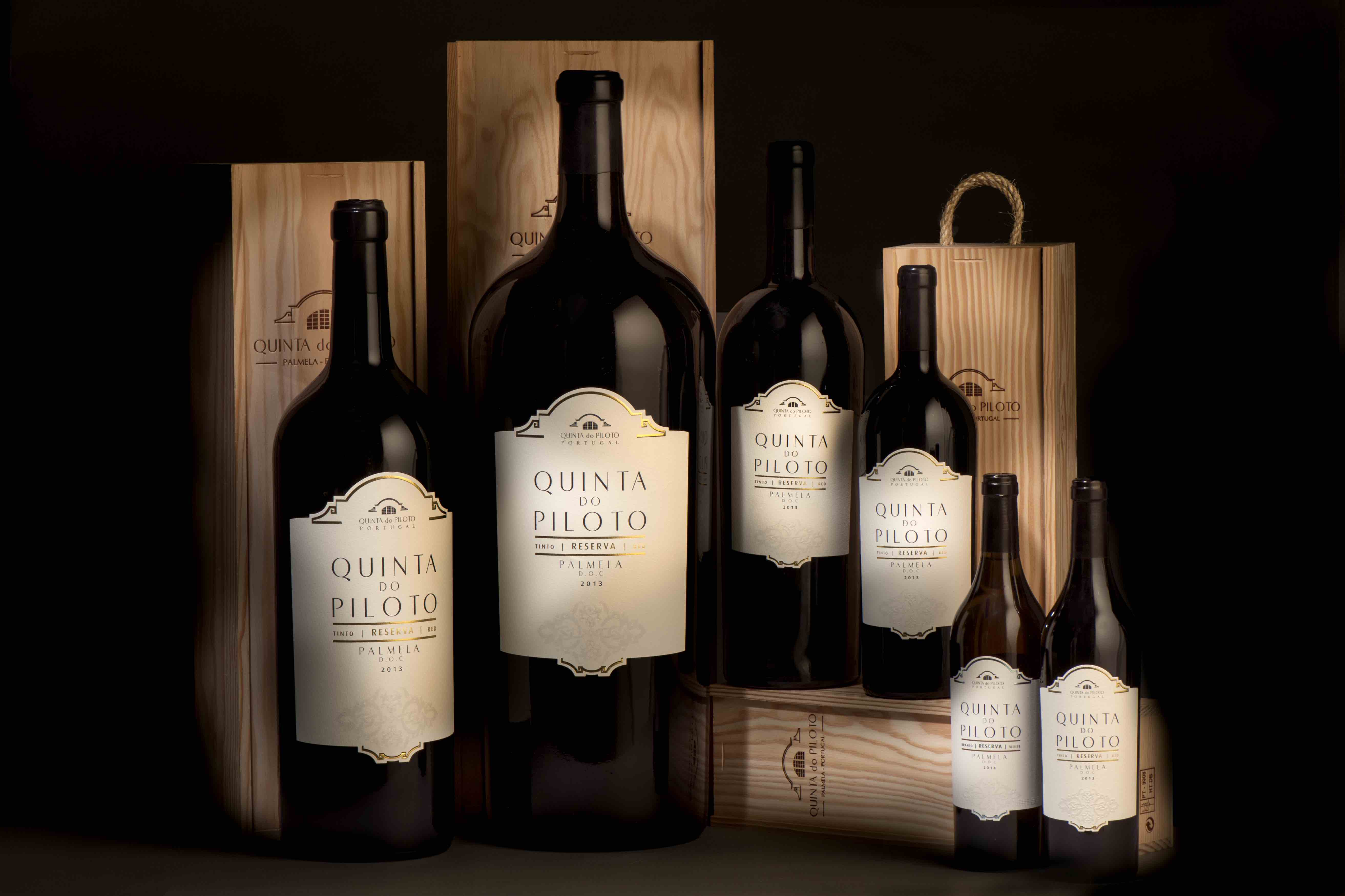
Wine speaks long before it is tasted. It does so through texture, through the patience of soil, through the silences between seasons. Some estates allow this language to grow louder with time, layering it with assertion and spectacle. Others listen more carefully, shaping their work around what the land offers and what history has already said. In these places, meaning accumulates slowly. Attention is rewarded not by immediacy, but by depth.
Quinta do Piloto belongs to this quieter register. Set in Palmela, on the Setúbal Peninsula, the estate has been guided across four generations by an understanding that expression is earned rather than declared. Rare grape varieties, restrained production and a close relationship with place form the vocabulary through which its wines are made. What does it mean, in a world accustomed to speed and scale, to allow wine to speak at its own pace - and to trust that those who listen will hear what matters?
Land, Sand, and the Limits of Yield
Palmela and the wider Setúbal Peninsula occupy a distinctive place in Portugal’s viticultural history. This is a landscape defined not by abundance, but by challenge - particularly the sandy soils that dominate the estate’s vineyards. These soils naturally restrict yields, demanding careful cultivation and rewarding patience with wines of concentration and elegance.
Over generations, Quinta do Piloto has learned to work with these conditions rather than against them. Low yields are not treated as a constraint to be corrected, but as a defining characteristic that shapes texture, balance, and depth. The result is a style marked by clarity and composure, where power is expressed quietly rather than overtly.
The estate’s four generations have approached the land as custodians rather than proprietors. Decisions are made with an awareness that vineyards evolve slowly, and that identity is formed over decades, not seasons. Terroir and time are inseparable here, together forming the foundation upon which the estate’s wines - and its reputation - rest.
Craft Over Volume
Production at Quinta do Piloto is guided by a clear philosophy: excellence cannot be rushed, and it cannot be scaled without consequence. Small production and limited editions are not marketing choices, but practical expressions of this belief. They allow close attention at every stage of creation, from vineyard decisions to cellar work.
Central to this approach is the preservation and exploration of rare and indigenous grape varieties. These grapes carry histories that cannot be replicated elsewhere, and working with them requires both technical skill and sensitivity. Ancestral knowledge provides the grounding, while thoughtful experimentation allows the estate to evolve without losing coherence.
This balance is evident in refined innovations such as Moscatel de Setúbal aged in whisky or rum barrels. These wines are not conceived to provoke, but to extend the estate’s vocabulary with care. Patience remains central - patience in ageing, in release, and in allowing wines to find their expression. It is this patience that underwrites both quality and credibility.
Wine as Narrative and Symbol
Beyond technique and terroir, Quinta do Piloto’s identity is shaped by narrative depth. The estate draws inspiration from Portugal’s maritime history, particularly the symbolic figure of the “Piloto-Mor” - the master navigator entrusted with guiding ships through uncertain waters.
This symbolism functions as a quiet organising principle. Wine-making, like navigation, demands judgement, mastery, and an ability to read subtle conditions. Decisions are not formulaic; they are informed by experience, intuition, and restraint. The Piloto-Mor does not dominate the journey, but guides it with discretion and knowledge.
In this context, wine becomes more than an agricultural product. It becomes an expression of navigation - of choosing direction, managing risk, and trusting accumulated understanding. Narrative deepens emotional connection not through spectacle, but through meaning that reveals itself gradually to those willing to pay attention.
Hospitality as Discretion
The estate’s philosophy extends seamlessly into its approach to hospitality. Wine tourism at Quinta do Piloto is not an add-on, but a continuation of its values. Experiences are intimate, personalised, and knowledge-led, designed for visitors who seek understanding rather than performance.
The role of staff is central. Team members are encouraged to become custodians of the estate’s history and culture, capable of communicating nuance with sensitivity and care. Discretion is fundamental - not as an absence of warmth, but as a form of respect for both the wines and the guest.
In a luxury landscape often defined by scale and visibility, Quinta do Piloto offers something quieter: experiences shaped by time, conversation, and authenticity, where the estate’s character is felt rather than explained.
There is no urgency in how Quinta do Piloto looks ahead. Decisions are made with the same deliberation that governs the vineyard and the cellar, attentive to what can be sustained without strain. Relationships beyond the estate are chosen carefully, favouring alignment over reach, and presence over exposure. The intention is not to be everywhere, but to remain recognisable wherever the wines are found.
What persists at the centre is a commitment to making fewer things well, and to allowing certain wines - and certain ideas - the time they require. The estate does not seek to refine its identity through expansion, but through repetition: returning, season after season, to the same questions of land, judgement and restraint.
In this sense, endurance is not an outcome but a practice. It lies in protecting conditions rather than pursuing scale, and in trusting that meaning accumulates quietly when it is not forced. What remains is not simply a legacy to be preserved, but a way of working that continues to make sense - slowly, deliberately, and without interruption.