
What Does Responsible Luxury Smell Like? Scentsophy Has an Answer
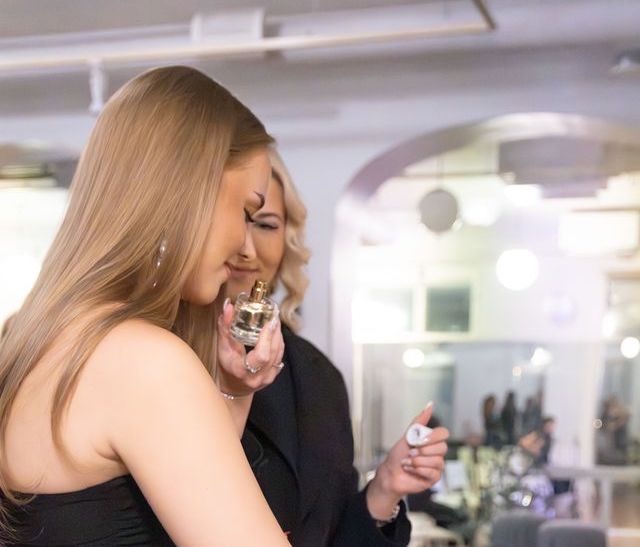
At Scentsophy, fragrance is treated as something deeply personal, never incidental. A thread of iris rising softly from the skin, the cool clarity of vetiver unfolding as the day warms, a faint trace of amber clinging to a wool coat long after an evening has ended. These are not loud statements. They are quiet signatures. Perfume, when composed with restraint and precision, settles into the spaces between gesture and memory. It becomes part of how a person is recognised, and how they are remembered.
But what does it mean for a scent to feel intimate in a world that now asks how intimacy is made? Today, fragrance is judged not only by how it evolves on the skin, but by where its ingredients come from and how it is produced. Questions of sourcing, safety and environmental impact now sit alongside artistry and longevity. Scentsophy operates within this shift, developing refined, long-lasting compositions while paying close attention to how and where each material is selected. The brand’s work reflects a growing expectation in luxury: that beauty and responsibility must be considered together. How that balance is achieved, however, is far from straightforward.
The Sensory Architecture of Identity
The growth of niche perfumery has altered expectations within the fragrance market. Increasingly, wearers seek compositions that feel aligned with temperament rather than attached to mass visibility. Perfume is chosen less for recognition and more for resonance. It signals discernment quietly, shaping presence without overt declaration.
Scentsophy situates itself within this recalibrated landscape through deliberate restraint. Its fragrances are constructed to evolve rather than announce. Individual accords unfold in sequence, allowing transitions to feel fluid rather than abrupt. Projection is considered but measured. Longevity is achieved without heaviness. The result is a composition that accompanies the wearer throughout the day, adapting subtly to environment and movement rather than dominating it.
This equilibrium between depth and wearability forms the basis of Scentsophy’s accessible niche positioning. While many artisanal houses emphasise exclusivity as their defining feature, Scentsophy focuses on refinement that integrates seamlessly into daily life. The brand’s proposition rests not on spectacle but on compositional coherence. Such positioning, however, depends entirely on structural discipline at the formulation stage.
Craft as Structural Precision
Fine fragrance is ultimately an exercise in calibration. The progression from volatile top notes to grounding base accords requires careful planning if the experience is to remain cohesive over time. Scentsophy approaches formulation as architectural design, selecting materials for how they perform across hours rather than for immediate impact alone.
Longevity is treated as an outcome of structure rather than saturation. Notes are balanced to complement rather than compete, allowing the scent to retain clarity as it settles. Clean formulation standards introduce further complexity, demanding alternatives to conventional shortcuts that might otherwise intensify projection at the expense of transparency. Depth is therefore built through layering and proportion, ensuring that richness does not become density.
This technical discipline extends beyond olfactory performance. Ingredient selection involves evaluation of traceability, ethical provenance and environmental footprint before blending begins. Materials are assessed not only for their aromatic quality but for the broader implications of their sourcing. In this respect, craftsmanship is inseparable from scrutiny. Precision governs both composition and supply chain, reinforcing the brand’s commitment to integrity at every stage of development.
Packaging decisions reflect similar intent. Recyclable components and the exploration of refillable formats are incorporated into production planning rather than appended as secondary initiatives. The physical presence of the bottle is considered alongside its lifecycle, acknowledging that contemporary luxury must account for durability beyond aesthetics. By embedding responsibility into structural decision-making, Scentsophy advances a formulation model that balances sensual refinement with operational awareness.
Accountability as Embedded Practice
The fragrance industry now operates within an environment of heightened examination. Consumers increasingly expect transparency regarding ingredient origins, supplier relationships and manufacturing processes. Sustainability has shifted from peripheral concern to baseline expectation, particularly within the luxury segment.
For some brands, responsibility is communicated through narrative while operational frameworks remain largely unchanged. Scentsophy adopts a different approach, treating accountability as a foundational practice rather than an overlay. Traceability informs procurement. Ethical considerations shape supplier partnerships. Environmental impact is evaluated during development rather than retrospectively.
This integration reduces the friction that can arise when aesthetic ambition and ethical responsibility are addressed separately. Instead, both are considered simultaneously, allowing creative decisions to operate within defined parameters from the outset. The result is a production model in which responsibility is not an additional attribute but an organising principle.
Within a competitive market crowded by sustainability messaging, this structural integration distinguishes Scentsophy’s position. The brand does not rely on overt claims of virtue. Its differentiation lies in operational consistency. Craft, sourcing and presentation are aligned through a single framework, creating coherence across creative and commercial domains.
Scaling Without Dilution
Expansion presents particular challenges for niche-oriented fragrance houses. Increased demand can strain sourcing standards, while broader distribution risks diluting brand identity. Scentsophy approaches growth with measured intent, prioritising continuity over acceleration.
Digital platforms are developed to articulate formulation philosophy and material standards with clarity. Rather than amplifying visibility alone, communication centres on process and principle. New collections are introduced within the same disciplined parameters that govern existing lines, ensuring that innovation does not fragment the brand’s compositional identity.
Refillable systems and environmentally conscious packaging continue to evolve alongside creative development, reinforcing long-term commitments to resource efficiency. Market expansion is undertaken gradually, preserving the relationships and sourcing frameworks that underpin formulation integrity.
Through this cumulative model, Scentsophy advances a definition of responsible luxury that is progressive rather than performative. Identity informs craft. Craft shapes sourcing. Sourcing guides growth. Each stage reinforces the next, enabling the brand to expand without relinquishing the standards that define its character.
In answering what responsible luxury smells like, Scentsophy offers more than a sensory experience. It proposes a method. One in which refinement and accountability are structured together from conception to scale, allowing fragrance to remain both intimate and considered within a market that now demands both qualities.